Reason 10 of 13
Archaeology keeps confirming the setting
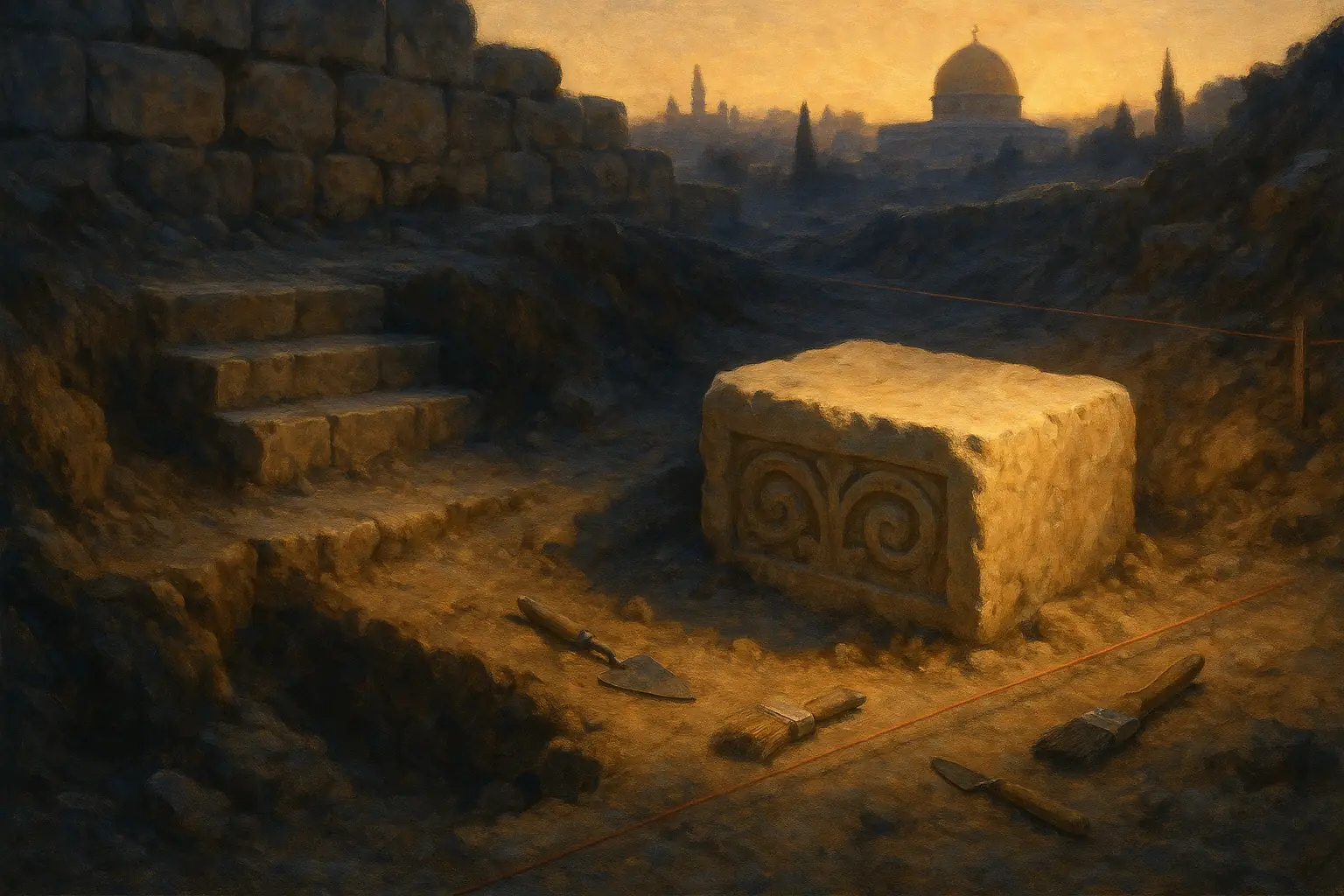
Stones and inscriptions found in the ground name people and places the Bible mentions: Pontius Pilate, the high priest Caiaphas, the Pool of Siloam and the house of David.
People
The Pilate Stone, found at Caesarea Maritima in 1961, carries a dedication by Pontius Pilate, prefect of Judaea. An ossuary (bone box) found in Jerusalem in 1990 is inscribed with the name of Joseph son of Caiaphas, very likely the high priest who questioned Jesus. The Tel Dan inscription, found in northern Israel in 1993 and dated to the ninth century BC, refers to the house of David.
1Now in the fifteenth year of the reign of Tiberius Caesar, Pontius Pilate being governor of Judea, and Herod being tetrarch of Galilee, and his brother Philip tetrarch of the region of Ituraea and Trachonitis, and Lysanias tetrarch of Abilene,
Luke 3:1 (WEB) · context
57Those who had taken Jesus led him away to Caiaphas the high priest, where the scribes and the elders were gathered together.
Matthew 26:57 (WEB) · context
Places
John's Gospel mentions the Pool of Siloam and the Pool of Bethesda with its porches. Both have been excavated in Jerusalem, matching John's descriptions. The Gospel writers knew the land before its destruction in AD 70.
7and said to him, “Go, wash in the pool of Siloam” (which means “Sent”). So he went away, washed, and came back seeing.
John 9:7 (WEB) · context
2Now in Jerusalem by the sheep gate, there is a pool, which is called in Hebrew, “Bethesda”, having five porches.
John 5:2 (WEB) · context
The strongest objection, stated fairly
Getting places and names right does not prove miracles happened.
How it answers
True: archaeology cannot prove a resurrection. What it shows is that the writers were careful about checkable details, the kind of writers whose other claims deserve a fair hearing.
11Now these were more noble than those in Thessalonica, in that they received the word with all readiness of mind, examining the Scriptures daily to see whether these things were so.
Acts 17:11 (WEB) · context
Where Christians disagree
- Archaeologists debate many details, such as the dating of some sites and how much of the early history of Israel can be confirmed. We list only finds whose identification is widely accepted.
Sources
- The Pilate Stone, Caesarea Maritima, 1961 (Israel Museum)
- The Caiaphas ossuary, Jerusalem, 1990 (Israel Museum)
- The Tel Dan Stele, 1993-94 (Israel Museum)
- The Pool of Siloam excavation, Jerusalem, 2004 (Eli Shukron and Ronny Reich)
Why the evidence matters
If Jesus rose, His offer is real
God loves you and gave His Son so that whoever believes in Him should not perish.