Reason 4 of 13
The tomb was empty: evidence for the resurrection
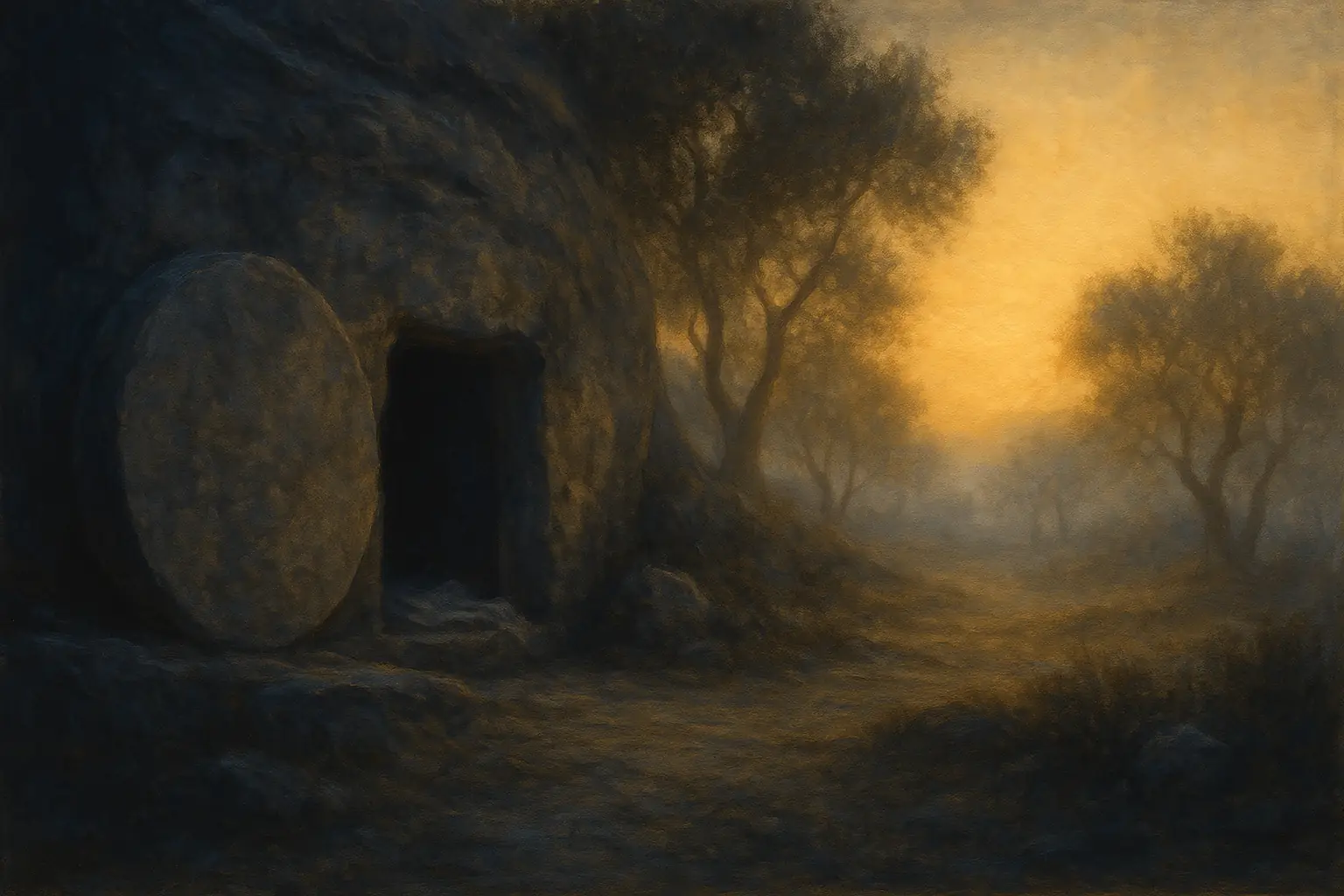
Jesus was buried in a known tomb in Jerusalem, and the first people to find it empty were women, whose testimony counted for little in that culture. Even the earliest counter-story admitted the body was gone.
A known tomb in a hostile city
The Gospels name the tomb's owner, Joseph of Arimathea, a member of the council. The resurrection was first preached in Jerusalem, the one city where the claim could be checked by walking to the grave.
43Joseph of Arimathaea, a prominent council member who also himself was looking for God’s Kingdom, came. He boldly went in to Pilate, and asked for Jesus’ body. 44Pilate was surprised to hear that he was already dead; and summoning the centurion, he asked him whether he had been dead long. 45When he found out from the centurion, he granted the body to Joseph. 46He bought a linen cloth, and taking him down, wound him in the linen cloth and laid him in a tomb which had been cut out of a rock. He rolled a stone against the door of the tomb.
Mark 15:43-46 (WEB) · context
29“Brothers, I may tell you freely of the patriarch David, that he both died and was buried, and his tomb is with us to this day. 30Therefore, being a prophet, and knowing that God had sworn with an oath to him that of the fruit of his body, according to the flesh, he would raise up the Christ to sit on his throne, 31he foreseeing this, spoke about the resurrection of the Christ, that his soul wasn’t left in Hades, and his flesh didn’t see decay. 32This Jesus God raised up, to which we all are witnesses.
Acts 2:29-32 (WEB) · context
Women as the first witnesses
Every Gospel says women found the tomb empty. In first-century Judaism a woman's testimony carried little legal weight; Josephus records that it was not accepted in court. Inventors of a story meant to persuade would not have chosen them. The best explanation for the detail is that it happened.
1But on the first day of the week, at early dawn, they and some others came to the tomb, bringing the spices which they had prepared. 2They found the stone rolled away from the tomb. 3They entered in, and didn’t find the Lord Jesus’ body.
Luke 24:1-3 (WEB) · context
10Now they were Mary Magdalene, Joanna, and Mary the mother of James. The other women with them told these things to the apostles. 11These words seemed to them to be nonsense, and they didn’t believe them.
Luke 24:10-11 (WEB) · context
The enemies' own story
Matthew records that the authorities spread the claim that the disciples stole the body while the guards slept. That explanation does not deny the empty tomb; it tries to account for it.
11Now while they were going, behold, some of the guards came into the city and told the chief priests all the things that had happened. 12When they were assembled with the elders and had taken counsel, they gave a large amount of silver to the soldiers, 13saying, “Say that his disciples came by night and stole him away while we slept. 14If this comes to the governor’s ears, we will persuade him and make you free of worry.” 15So they took the money and did as they were told. This saying was spread abroad among the Jews, and continues until today.
Matthew 28:11-15 (WEB) · context
The strongest objection, stated fairly
The empty tomb stories could be later legends, or the women could have gone to the wrong tomb.
How it answers
The burial tradition is part of the early creed (he was buried), and the wrong-tomb idea fails because the authorities could have produced the body and ended the movement at once. They never did; they explained an empty grave.
4that he was buried, that he was raised on the third day according to the Scriptures,
1 Corinthians 15:4 (WEB) · context
Where Christians disagree
- Some critical scholars doubt the empty tomb accounts. Gary Habermas's review of scholarly writing on the resurrection since 1975 (Journal for the Study of the Historical Jesus, 2005) found that a clear majority of the scholars who address the question accept that the tomb was found empty.
Sources
- Mark 16; Matthew 28; Luke 24; John 20
- Josephus, Jewish Antiquities 4.219
- Gary R. Habermas, Resurrection Research from 1975 to the Present, Journal for the Study of the Historical Jesus 3.2 (2005)
- N. T. Wright, The Resurrection of the Son of God (Fortress, 2003)
Why the evidence matters
If Jesus rose, His offer is real
God loves you and gave His Son so that whoever believes in Him should not perish.